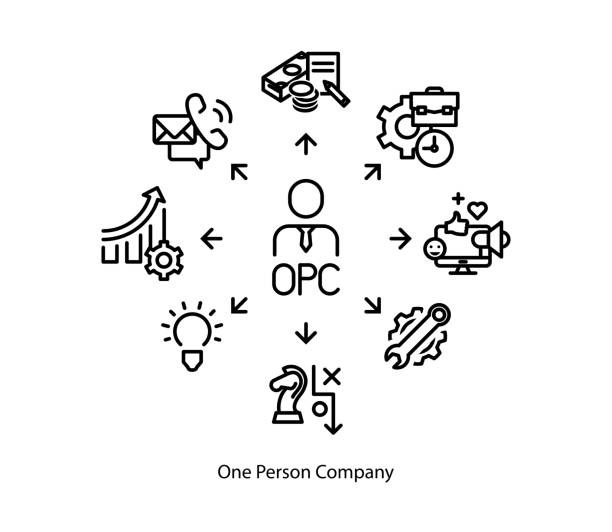

One Person Company (OPC)
A One Person Company (OPC) is a legal business structure in some countries, such as India, introduced to support entrepreneurs who want to start their own business with limited liability while still enjoying complete control of the company. It blends the benefits of a sole proprietorship with the advantages of a private limited company.
1. Key Features of an OPC:
Single Shareholder:The company is owned by one person, who holds 100% of the shares.
Limited Liability:The owner's personal assets are protected. If the company incurs debts or losses, the liability of the owner is restricted to their investment in the company.
Separate Legal Entity:An OPC is distinct from its owner. It can enter into contracts, own property, and sue or be sued in its name.
Single Director or Multiple Directors:The company must have at least one director (the owner), but it can have up to 15 directors.
Nominee Requirement:A nominee is required during incorporation. This nominee will take over the company in case the sole owner dies or becomes incapacitated.
No Minimum Capital Requirement:An OPC can be incorporated without any mandatory minimum paid-up capital
2. Advantages of an OPC
Small-Scale Operations: It is ideal for entrepreneurs starting small but planning to grow.
Reduced Compliance Burden: Compared to larger companies, OPCs have simpler compliance requirements, such as limited board meetings.
Legal Recognition: It is recognized as a separate legal entity, providing legal protection and transparency.
3. Disadvantages of an OPC:
Growth Restrictions: An OPC is allowed to remain an OPC only if its turnover is below a certain threshold (e.g., ₹2 crore in India). Beyond this, it must convert to a private limited or public limited company.
Compliance Costs: While simpler than a private limited company, it still involves annual filings, auditing, and tax compliances that can be burdensome for very small businesses.
Nominee Requirement: Appointing a nominee during incorporation may seem cumbersome, as the nominee must consent to their potential future role.
Limited to One Shareholder: Only a single person can own the business, so it's not suitable for partnerships or multiple investors.
Why You Might Need an OPC?
The need for a One Person Company (OPC) arises from the limitations of other business structures, such as sole proprietorships, for individuals who wish to start their own ventures. Here’s a detailed explanation of why you might need an OPC:
1. Limited Liability Protection:
In a sole proprietorship, the owner is personally liable for all debts and liabilities. This means personal assets like your home or savings can be at risk if the business fails.
An OPC provides limited liability, ensuring that the owner’s liability is limited to their investment in the business. Personal assets remain protected.
2. Legal Recognition:
An OPC is a legally recognized entity, separate from its owner. This distinction is not available in a sole proprietorship, where the business and the owner are considered the same entity.
This status allows the OPC to own property, enter into contracts, and operate independently of the owner.
3. Single Ownership with Full Control:
An OPC allows a single individual to own 100% of the company while retaining full decision-making authority.
This is ideal for solo entrepreneurs who do not want to share ownership or decision-making power but still want the benefits of a company structure.
4. Succession Planning:
A nominee must be appointed during the registration of an OPC. This ensures continuity of the business in case the sole owner dies or becomes incapacitated.
In a sole proprietorship, there is no automatic mechanism for business continuity.
5. Credibility and Professional Image:
Businesses registered as OPCs often enjoy greater credibility with clients, banks, and investors compared to sole proprietorships, which are considered informal setups.
The professional structure of an OPC can help in establishing trust and attracting opportunities.
6. Easier Access to Funding:
An OPC, being a registered company, is more likely to secure loans or funding from banks and financial institutions compared to an unregistered sole proprietorship.
This can be vital for businesses that need capital to scale operations or invest in growth.
7. Protection of Brand and Assets:
As a legal entity, an OPC can register its own name, trademarks, and other intellectual property, ensuring protection of the business’s identity and assets.
In a sole proprietorship, such protections are tied to the owner and can be more complicated to manage.